 Categories

Every stormwater vault does its best work underground, settling sediment, filtering pollutants, and keeping runoff from overwhelming a site. But that below-grade location is why routine maintenance gets overlooked until a system backs up, floods a parking lot, or fails an inspection. A well-built vault only performs as designed if it can be accessed, cleaned, and inspected on a predictable schedule.
At Harper Precast, we design stormwater treatment structures with operations and maintenance in mind from the start.
Below, we walk through the four pieces of vault O&M that tend to cause the most headaches for property owners, contractors, and public works teams: access, sediment storage, bypass systems, and confined space safety.
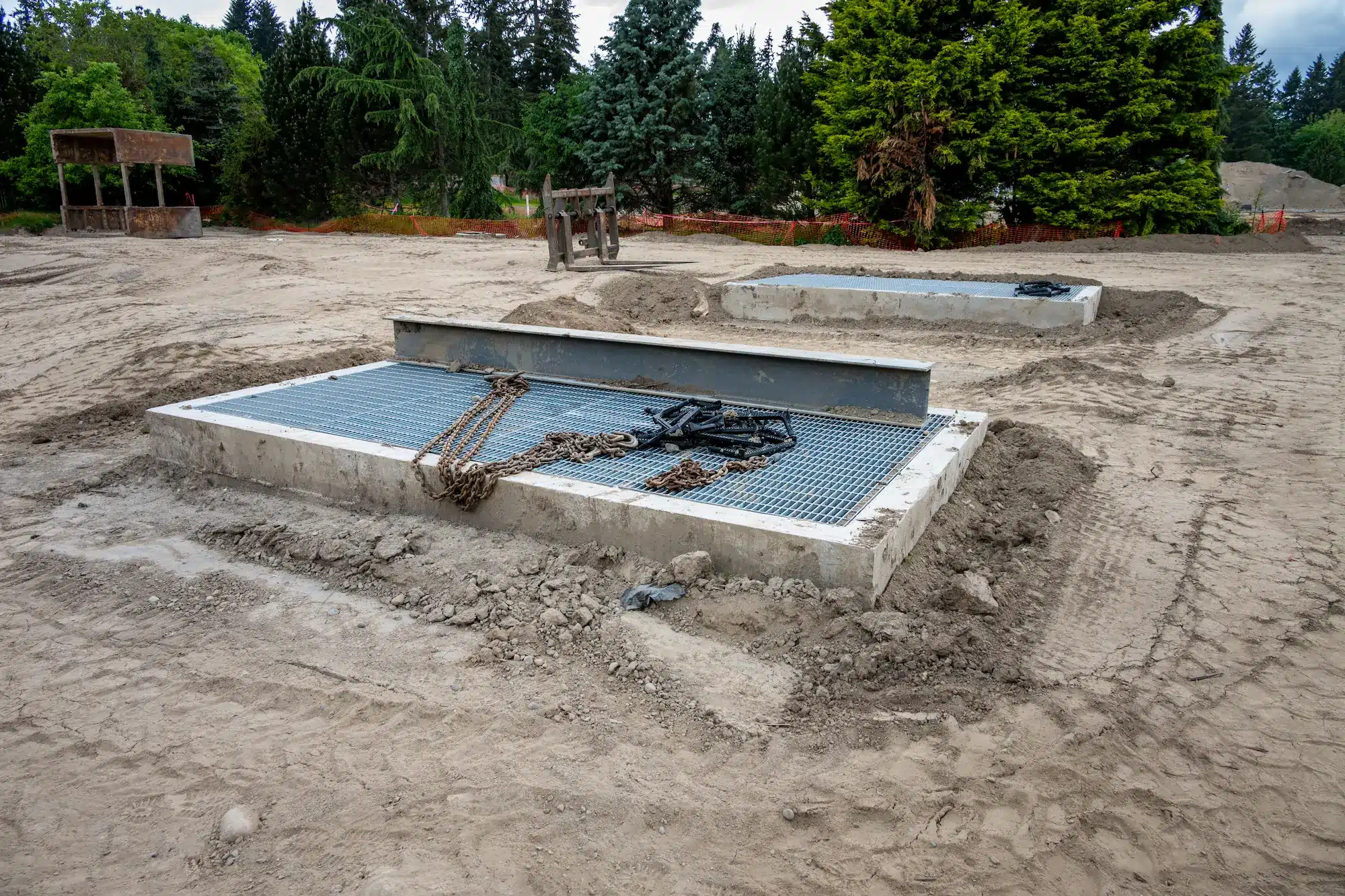
A stormwater vault is only maintainable if crews can get into it easily. That sounds obvious, but access is one of the most common design oversights on both residential and commercial projects. Undersized hatches, poorly placed risers, or manholes buried under landscaping can turn a routine inspection into an excavation.
Good access design accounts for a few practical realities:
Civil engineers and public entities in particular need to think about this at the design phase, since retrofitting access into an existing vault is far more disruptive than specifying it correctly the first time.
Stormwater vaults capture what runoff carries with it: sediment, debris, oils, and in many systems, phosphorus and other pollutants. Harper Precast’s stormwater treatment BMP structures are built to remove more than 80% of total suspended solids and roughly 40% of phosphorus before water leaves the system.
Every vault has a finite sediment storage volume, and once that capacity fills, treatment efficiency drops off. A vault that isn’t cleaned out on schedule starts passing more pollutants downstream, defeating its purpose.
The cleanout interval depends on the site: a gravel lot with heavy sediment load behaves differently than a paved commercial parking area. Regular inspection, ideally paired with sediment depth measurements, keeps the schedule on track and the system as intended.
No vault is built to treat every drop of water that could conceivably fall on a site. Design storms have defined return periods, and anything beyond that threshold needs somewhere to go that doesn’t involve flooding the structure itself or damaging downstream infrastructure.
A properly engineered bypass routes excess flow around or through the treatment structure during high-intensity events, protecting both the vault internals and the surrounding site. Skipping this step, or under-designing it, is a common way projects run into flooding complaints during the first storm after installation.
For contractors and developers, this is something to flag early with the engineer of record. Bypass capacity, elevation, and outlet control all need to work together, and they’re much easier to get right on paper than to correct after the concrete is in the ground.
Stormwater vaults typically qualify as confined spaces under OSHA’s 1910.146 standard, and many meet the criteria for a permit-required confined space: limited entry and exit, the potential for hazardous atmosphere, and the risk of engulfment from sediment, standing water, or flowing material.
Vaults can accumulate low-oxygen conditions, trap hydrogen sulfide or other toxic gases, or hold enough sediment and water to engulf a worker who enters without atmospheric testing, ventilation, and a retrieval system in place.
For any organization responsible for stormwater vault maintenance, this means:
Cutting corners poses a serious safety risk, and one that public entities and commercial property owners can be held liable for if a contractor isn’t properly trained or equipped.
A stormwater vault that’s hard to access, undersized for the sediment it collects, or missing a bypass plan will eventually become an emergency. The good news is that nearly all of this is preventable at the design and specification stage.
Harper Precast has spent decades fabricating precast concrete stormwater structures for residential, commercial, and public infrastructure projects across Utah and the broader Intermountain West. We build treatment structures that hold up to inspection and hold up to decades of runoff, with easy access points and capacity your maintenance team needs.
If you’re planning a new stormwater installation or evaluating whether an existing structure meets your site’s demands, let’s talk about the details. We’ll help you get the design right.


